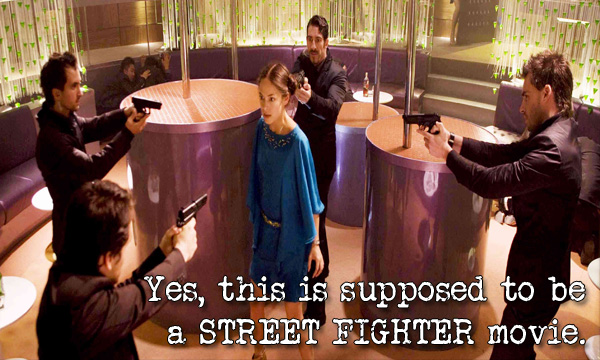
GameFAQs Review – Street Fighter III: Double Impact (Dreamcast)

A quick look back at the history of STREET FIGHTER: The first game was released in 1987 and was a bleep under everyone’s radar for being frustrating to play despite presenting an innovative 6-button set-up. The second game came out in 1991 and wowed everyone with its smooth fighting mechanics and slick gameplay to the point where an entire genre of video game was born. And then… we got a whole bunch of prequels, updates, sidegames, puzzle games, and just about everything but a clear cut Street Fighter III. Jokes were made about Capcom not being able to count to three – which is actually quite funny in hindsight when you think about it, because this is the same company that has churned out Mega Man sequel after Mega Man sequel on the NES, which proves that they can count just fine, but let’s run with the joke for a minute, shall we?

When the year 1997 rolled around, it proved to be a monumental year for video games. Why? Because Capcom finally learned how to count to THREE… okay, joke over. And people were mixed in its reception. Some liked it, some hated it, but most agreed it was different from most Street Fighters played before… okay, not really, but still… at least they can count to three. Can’t wait until they count to Number FOUR!

Um, sidenote: It wouldn’t be until 2009 that Capcom would release a Street Fighter IV… which turned out to be Street Fighter II in 3D! Lame.

Anyway, all kidding and snarkiness aside, Street Fighter III was released and later got a slight revision called Second Impact… and then got another revision/sequel/remake called Third Strike, which is considered by most to be one of the finest fighting games ever developed and I have to agree. But in the interim, Capcom released both SF3 New Generation and SF3 Second Impact onto a Dreamcast disc almost appropriately titled Double Impact. Sadly, there’s no Jean-Claude Van-Damme to be found… oh wait.

Continue reading “GameFAQs Review – Street Fighter III: Double Impact (Dreamcast)”

GameFAQs Review – Vulgus (Arcade)

Vulgus is a 1984 vertical-scrolling space shooter and is best known for being the first-ever video game developed by Capcom, an obscure video game company that nobody’s heard of… they churned out a few arcade games that made tons of money… yup, never heard of them.

Right, back to the game…

Given that Vulgus is an early game, its mechanics are rather simplistic. You control a little spaceship and must battle alien forces attempting to take over the world in an endless struggle. Ah yes, one of those scenarios. Never gets old.

There are no power-ups or weapon boosters; only your basic cannon and a limited number of missiles (that you can collect more of along the way). There are various items, but these serve to alter the enemies you face, whether it be their speed, firepower, or ship design that changes. Without reading any instructions or familiarizing oneself with the controls, Vulgus is very easy to get into and understand. The premise is simple, the difficulty is decent, and the controls are competently responsive. So it’s a whole straightforward affair.

For a title that came out in 1984, Vulgus looks pretty decent with well-defined backdrops and smoothly-animated spritework. The levels are dull though; you’re on a sandy world, then over a body of water, then outer space, then the whole thing loops again, but with a new wave of enemies. The game looks fine for the most part, but it can get boring after a while.

The sound in Vulgus is the game’s sole low point. The sound effects used in the game are pretty bad and the “music” playing in the background is roughly ten notes long and also annoying. This “tune” is the only piece you’ll be hearing throughout the game and it keeps on going until the game ends… or until the power goes out. Whichever comes first.

Although it’d be difficult to find Vulgus at an arcade these days – finding an arcade is difficult enough these days, actually – it has appeared on a number of Capcom-released compilations, most notably the Capcom Classics Collection release on PS2 and Xbox. While the game is ultimately unspectacular and antiquated, it is a fine first effort from the company who would eventually spawn a dozen other popular franchises and is worth a few playthroughs at best. If you do get a chance to play it, then do so. You’ll actually like it… somewhat.

BREAKDOWN
Graphics: 8/10 (decent graphics, but little variety)
Sound: 2/10 (droning tune and awful sound effects)
Gameplay: 9/10 (keeps it simple, controls well, competent gameplay)
Challenge: 7/10 (fairly difficulty by SHMUP standards, but constant)
Replay Value: 6/10 (dull, generic, but quite fun actually)

OVERALL: 7/10

GameFAQs Review – Astro Warrior (Master System)

An early Sega Master System released in 1986, Astro Warrior is another in a long line of old-school space shooters that have very basic controls, very basic gameplay, and tends to be not all that interesting in the long run. And while I tend to frown on these games from a reviewing standpoint, I’d be lying if I said I didn’t have any fun with them. After all, most people will recall that games such as Space Invaders or Galaga were fairly barebones shooters and yet they were still fun. However, those games were released in arcades in the late-1970s or early-1980s and were considered trendsetters for what they established in the gaming world back in those days. Astro Warrior was released much later during a time when more sophisticated shooters were on the rise, both in arcades and home consoles.

Astro Warrior has you in the role of a space pilot who must deal with the evil alien forces trying to take over the universe or something. Much like most basic shooters, you move your ship with the directional pad and shoot with one of the two fire buttons. You’ll collect power-ups that will boost your speed as well as your firepower, including tri-shots, laser beams, and Gradius-style multiples that increase your firepower. As per the case with most shooters, at the end of each level, you’ll face a boss and must defeat him to move on to the next level.

For the most part, Astro Warrior pretty much nails the basic essentials of a SHMUP and a video game in general. The controls are pretty responsive, simple to understand, and easy to learn without reading any manuals or FAQs. The graphics are a nice piece of work and while they may seem generic (and they are), they are actually a bit more detailed, colorful, and the scrolling is somewhat smoother than what you’d find on the NES during those days. The sound quality is a little lacking, but I like the tunes in this game, so it’s not terrible.

The game only has three levels altogether and once you beat the final level, you repeat back to the first, this time with the difficulty increased somewhat. This is one of those shooters where you really need to collect as many power-ups as possible and pray that you don’t die later on, because the game can get plenty tough if you’re careless. Once you memorize patterns, it doesn’t seem all that harder, but the challenge is still there.

Overall, Astro Warrior is a fairly decent game that will entertain a few people that want a quick gaming fix. The more hardcore SHMUP fans among you might look past this game due to its simplicity and short length, but I would recommend giving this game a try.

BREAKDOWN
Graphics: 7/10 (generic looking, but still rather nice)
Sound: 6/10 (good tunes, but crummy sound)
Gameplay: 7/10 (controls functional, fairly basic gameplay – short variety)
Challenge: 8/10 (usual shooter difficulty – only three levels and they loop)
Replay Value: 4/10 (not much to hold you over – but still fun unless you have better games)

OVERALL: 7/10

GameFAQs Review – Teenage Mutant Ninja Turtles: Turtles in Time Re-Shelled (Xbox 360)

So a friend of mine had downloaded the newest TMNT game at the time: a modern-day remake of the classic brawler “Turtles In Time”. The remake, titled Turtles In Time Re-Shelled, is based on the arcade version (that I never played) rather than the expanded Super NES version (that I did play), so for the sake of curiosity (and to save myself the cash), I’ve had the chance to invade his domain and give the game a go a few times.

Cowabunga, right? More like Cowa-Dunga.

As a whole, the old-school side-scrolling beat-em-up brawler is quite possibly the most perfect example of a genre following the KISS (Keep It Simple, Stupid) philosophy: you have a jump button and an attack button, you keep moving right while stopping to dispatch enemies, and fight the boss at the end of the level. Rinse and repeat several more times. While not necessarily deep gaming experiences and can get pretty boring after extended plays, they are entertaining little things and are more fun when played with friends.

Re-Shelled, for the most part, maintains this level of simplicity with its fair recreation of the experience, but then destroys it by introducing 3D combat, meaning you can attack in eight directions. It’s mind-boggling, it doesn’t really work that well, and sometimes the hit detection is relatively weak. You also have a double-jump ability that is, for all intents and purposes, pretty useless and you’ll probably forget it’s even there unless you pull it off by accident. Aside from those changes, Re-Shelled plays similarly enough to Turtles In Time, but won’t really take that long to finish. Probably an hour at best, if you even stick around that long.

Yeah, they did add a Survival mode to the game… but it’s the same game all over again. An option to play the original “Turtles In Time” would have been nice, but I guess that’s rather impossible – since Konami was the original creators of the game.

Graphically and audibly speaking, Re-Shelled is terribly unappealing. While they tried to mesh the cartoony-style with the more hard tone of the recent TMNT movie, it doesn’t really work that well. Everything looks dull and drab, the animation is not all that great, and there’s virtually no color to be found; just the mere pretense of color. The voice acting, music, and sound effects in Re-Shelled are also far below par; absolutely devoid of life and energy. The music, in particular, is completely dull and very un-TMNT in its tonality. Honestly, whenever I’m listening to the music in this game, I can’t tell if I’m playing Ninja Turtles or Cheetahmen.

The only good thing I can say about this game is that you could play four players locally or online. Although I can’t really comment on the online portion, the game does get fun with the presence of friends… but even then, you’ll probably break out the old SNES cartridge and play that instead.

If you’re still on the fence as to whether Re-Shelled is worth the money, try the demo out. But I strongly urge you not to fork the cash. At 800 Microsoft points, Re-Shelled’s price is a bit steep for what is essentially a barebones, third-class remake of an arcade classic. Your best bet for pure “Turtles In Time” action would be to get the Super NES version, which is the best version of the game despite being two-players. Even the arcade port included in TMNT3: Mutant Nightmare with its butchered sound is a better alternative than this half-shelled attempt at a remake.

BREAKDOWN
Story: 7/10 (same as the original Turtles In Time, no problem)
Graphics: 4/10 (dull, drab, colorless, not very appealing)
Sound: 3/10 (an audible nightmare, music is pretty bad)
Gameplay: 3/10 (8-way fighting doesn’t work; wonky hit detection, lame)
Challenge: 5/10 (not too tough; can be beaten in an hour’s time)
Replay Value: 3/10 (fun factor lacking despite two extra modes)

GameFAQs Review – Tron: Deadly Discs (Atari 2600)

Partly based on the early 1982 CGI film from Walt Disney Pictures, Tron: Deadly Discs places you in control of the titular hero Tron who must use his Deadly Disc to defeat the various enemies who appear on-screen, all the while avoiding their own brand of Deadly Discs. Now, my understanding is that this Atari 2600 game is basically a stripped-down version of the game that appeared on the Intellivision system, but since I’ve never touched an Intellivision in my life (the PS2 compilation disc doesn’t count), I can’t really make comparisons.

What I can tell you is that despite its bland appearance, this is actually a fun game that works rather well given the simple controls and play mechanics. Obviously, your main goal is to defeat your enemies by killing them with your Deadly Disc. You aim your disc by holding the joystick in the direction you wish to shoot and press the fire button. And this actually works well; it’s simple and to the point.

When you clear a wave of enemies, more will appear – each wave being much quicker and cunning than before. Although you have only one life per game, you can take five hits before being destroyed and bringing the current game to a close, but clearing the current wave without taking a hit before any more enemies respawn will restore a bit of your power. Likewise, you can use the portals on the side of the playfield to teleport to the other side, closing off the portals you travel through. It makes for interesting attack strategies and could either help or impede your progress against your many opponents.

While the graphics for Tron: Deadly Discs is bland and boring to look at, the game’s sound effects are actually done rather well and do a good job of enhancing the overall mood of the game. Quite possibly the best part is that there is no music to torture either the player or those watching the gameplay. The 2600 had a few games with decent music, but the majority of those with musical pieces had terrible music. So it’s nice that Deadly Discs avoided that snafu and went the silent route outside of the final death wail, which sounds appropriate to say the least.

Whether or not you are a fan of the Tron film, Deadly Discs is certainly a great game that is actually pretty fun to play and a good challenge to be had for those looking for one. What it lacks in appearances, it makes up for in great gameplay, appropriately programmed sound effects, and pure fun. Recommended.

BREAKDOWN
Graphics: 5/10 (single-color objects, rather bland appearance)
Sound: 8/10 (some decent sound effects on the 2600, no music a big plus)
Gameplay: 9/10 (simple premise, controls great)
Challenge: 7/10 (moderate difficulty based on reflexes)
Replay Value: 6/10 (bland visuals might turn off some, but still fun)

OVERALL: 7/10

GameFAQs Review – Ninja Golf (Atari 7800)

So you’ve heard of the Atari 7800, right? The console that never made it anywhere because people were too busy playing Nintendo? The console with a small library of 7800 games that was also compatible with a large number of 2600 games?

Yeah, that’s the one.

Ever hear of this game called Ninja Golf? The game where you assume a role of a ninja playing golf, but instead of a golf cart, you have to run through hordes of enemy ninjas, sharks, birds, and other dangerous creatures? A title considered by many game players to be one of the Atari 7800’s finest games ever made?

What?! You’ve never heard of Ninja Golf? Have you no honor? Do you not realize your dishonorable conduct by acknowledging your ignorance of this ancient sport?

Sit then and listen, as I bestow upon the secrets of Ninja Golf and why you should play it. For it may be the only way to restore the honor you never had…

Continue reading “GameFAQs Review – Ninja Golf (Atari 7800)”

GameFAQs Review – Pac-Man (Neo-Geo Pocket Color)

Everybody’s played Pac-Man. Everybody knows Pac-Man. Everybody’s aware of Pac-Man. Pac-Man is everywhere, man. Even on the Neo-Geo Pocket Color. And I’ll be honest; the fact that Pac-Man was available on an SNK-developed system surprised me to say the least, since I don’t recall the standard Neo-Geo console having that many (if any) third-party games. And while that stance may have lightened up over the NGPC (with a Sonic The Hedgehog game having been released on the system as well), it was a matter of too little, too late for the system since SNK soon went into bankruptcy… but I’m sidetracking here. Let’s talk about the game.

The first thing that is immediately noticeable about the NGPC version of Pac-Man is that you can choose to play a full-sized version (which scrolls the screen) or a FULL VIEW version (which fits the maze onto the screen) of the game. In all the versions of Pac-Man on portable systems I’ve played prior to this release, I don’t recall such a feature existing as you would just play the full-sized version with scrolling. Regardless, it’s a nice option to have for those who want to see the full maze as was intended.

The next thing you’ll notice is that just about everything you’ve come to love about the original Pac-Man arcade game has been splendidly ported over to this portable format. The sound and graphical quality is up to par with the NES version of the game, which itself was a very solid port of Pac-Man. Nothing seems to have been dropped or replaced during the conversion and while there is no multiplayer capability, it’s not much of a major loss. No, they did a really nice job with this NGPC port… I have no real critiques about it. It’s very well done.

If anything, my sole complaint with this version of Pac-Man is that I have to use the NGPC’s control stick to guide Pac-Man through the game. Don’t get me wrong; I like the control stick when in use for games such as King of Fighters or Samurai Shodown, but it really doesn’t do Pac-Man justice. Oftentimes, the response time is somewhat delayed when I want to change directions and it’s real easy for your thumb to slip and cause you to change direction unintentionally… and this usually happens result in me colliding with a nearby ghost and losing a life. The stick tends to get slippery at times, but I suppose this is a minor complaint.

Overall, Pac-Man on the NGPC is a solid port of an arcade game that has seen its share of excellent ports as well as not-so-excellent ports. If you have a NGPC hanging around and don’t have this game, then it’s definitely worth a purchase even if you have any of the eleventy-million ports out there. For those who don’t have a NGPC, they used to sell them with six games for a few bucks. I suggest tracking down the bundle if possible.

As far as Pac-Man goes, it’s a great port. Recommended.

BREAKDOWN
Graphics: 9/10 (looks great in full-screen mode, looks near arcade-perfect in full-sized mode)
Sound: 9/10 (all the classic sounds nicely converted and preserve)
Gameplay: 7/10 (solid conversion of the arcade game hampered by NGPC’s control stick)
Challenge: 8/10 (easy at first, but gets harder quickly – a shame there’s only one maze)
Replay Value: 7/10 (Pac-Man is great fun)

OVERALL: 8/10

GameFAQs Review – Brain Age 2: More Training in Minutes a Day (Nintendo DS)

This is something of a quickie for a game that probably suits the more casual player than the usual gaming crowd. In fact, I have to say that this was my first DS game (mostly because it was the pack-in game at the time) and for the most part, I actually got a bit of gameplay out of it every day even when I started getting other games for the system. This is actually quite surprising since I’m not the kind of person who would normally play these kinds of games… although I think Brain Age 2 has one of the better Sudoku games out there, as it’s easy to get into and the game will even help you out with some hints to determine whether you’re doing good or not.

Despite the title, Brain Age 2 isn’t necessarily a sequel to Brain Age, but rather an updated version of the game, with revamped mini-games along with some new ones, a new set of Sudoku puzzles, and the hidden Virus Buster game, which is essentially Dr. Mario with a stylus. All of these games, for the most part, are pretty fun activities that make good use of the stylus and microphone features on the DS. However, there are times when recognition is rather wonky, as I would clearly draw a cross sign (multiplication) and somehow get a plus sign. Also, I’ve heard that microphone recognition is fairly hit-or-miss, but I never really used those.

Being that the game comprises simple skill tests and math problems, the graphic and sound capabilities of Brain Age 2 are minimal, with occasional lounge music and sound effects playing every so often during intermissions and menus. The graphical representation of the good doctor – the floating head on the top screen of your DS – is nicely rendered, but still a little rough. It seems that no improvements have been made from the original Brain Age to enhance or smooth out the polygon edges of the doctor. It’s not a major issue, but it does give the game more of a rehashed feel than some would care for. Of course, if you’ve never played the original Brain Age (as was the case with me until recently), then this shouldn’t be an issue for you.

The only main issue I have with this game is its longevity. While Brain Age 2 expects you to play with it for the entirety of a calendar year (or so it seems), chances are you’ll be abandoning it within the span of a couple months, as the offering of games are short and limited in their play value. Yes, there are hard modes that can be unlocked, but these don’t help to enhance the replay value of the game. Yet what makes Brain Age 2 interesting is its “conscious” state – it’ll react accordingly when you’ve popped in the game several days in a row or after a several-month-long break. It’s a rather interesting (and creepy) feature that gives the game some charm. Too bad there’s not much else to keep you around.

For those who enjoyed the original Brain Age release or other similar titles, then Brain Age 2 should serve as a nice addition to your collection, as it’s more of the same you’ve come to expect from Brain Age and perform a little more. Fans of Sudoku or Sudoku-based video games will also enjoy the game’s 100+ puzzles included in the game. For the more “hardcore” crowd, though, I can only suggest you give it a shot to see if it suits your interests.

Either way, your brain will thank you for this game… but only for a couple months.

BREAKDOWN
Graphics: 5/10 (pretty minimal – although the head looks quite nice even if rough)
Sound: 8/10 (also minimal – crisp, clear, unannoying)
Gameplay: 8/10 (wide variety of activities, but sometimes stylus recognition is wonky – hidden Virus Buster is fun)
Challenge: 7/10 (a fair amount of challenge in the various skill tests – Sudoku is quite fun)
Replay Value: 4/10 (good enough for the casuals, but will last you a couple months at most)

GameFAQs Review – Akumajou Dracula (X68000)

Akumajou Dracula, released in 1993 for the Japanese computer Sharp X68000, is a remake of a similarly titled game originally released in 1987 for the Nintendo Famicom Disc System, which was later converted to cartridge form when brought over to North America for the Nintendo Entertainment System. You probably know the game by its localized title: Castlevania.

The X68000 Akumajou Dracula game, initially available only in Japan, would later see a re-release in 2001 for the Sony Playstation under the name Castlevania Chronicles; the first time the game would officially be available on North American soil. In addition to a port of the original game, Chronicles included an Arrange mode which introduced new graphical effects, inserted new sprites, and toned down the difficulty of the game.

This review is based on the actual Akumajou Dracula game that appeared on the Sharp X68000 computer.

Continue reading “GameFAQs Review – Akumajou Dracula (X68000)”

GameFAQs Review – Dragster (Atari 2600)

Dragster… the epic drag-racing game that swept the nation upon its release on the Atari 2600. The most exciting brand of… oh, who am I kidding? This game is not very good, it’s not very long, and as a whole, the fun is virtually non-existent unless you’re three years old or drunk. Probably both.

The premise of Dragster is as follows; two dragsters race to see who reaches the other end of the screen. Planning on holding that button? Don’t; you’ll blow your engine that way. You’ll have to tap your button to keep the car moving while keeping the engine from overheating. It’s actually pretty inventive gameplay and it makes for good times, but once you really start getting the hang of it, the game ends. And with the experienced gained from the first few playthroughs, future rounds of Dragster will likely last you less than ten seconds. You have a few modes here, but they do little to extent the play time or enjoyment of the game. You’re still racing across the screen; no variations, no extra tracks, nothing to keep this game from collecting dust on a shelf.

I guess that explains why the visual presentation and sound is below par even by Atari 2600 standards. This has to be one of the least visually-appealing games on the system, as the drag racing vehicles look more like the lower half of a black lawnmower than actual cars. When your engine blows, the car melts and that’s it. No exploding pixels, no flying blocks of debris, none of that. I would think that if I were going to buy a game that essentially had ten seconds of gameplay per game, I would expect the game to look good, even by Atari 2600 standards. Alas, this is not to be.

As for the sound effects, they’re mostly tolerable, but not much more than that. Even so, they’re not enough to save Dragster from being a colossal failure.

The game is readily available on the Activision Anthology that was released on PS2 many moons ago and that’s probably the best place for Dragster these days. For all of the many great games Activision had put out on the Atari 2600, this is clearly not one of their better efforts. Anyone looking for a good racer on the 2600 has more than enough options on the system that can be considered better than Dragster. Considering you’re not getting enough bang for your buck with Dragster, it’s definitely not worth the money. Avoid.

BREAKDOWN
Graphics: 2/10 (minimalist graphics)
Sound: 3/10 (tolerable, but not much more than that)
Gameplay: 4/10 (neat concept, doesn’t last long enough to be worthwhile)
Challenge: 3/10 (don’t blow that engine and you’ll be fine)
Replay Value: 1/10 (very little to keep you from playing better games)

Overall: 2/10