COMIC REVIEW – Teenage Mutant Ninja Turtles #1 (Mirage Studios – Volume 1)

the one that started it all… and after reading it, I’m amazed they were able to continue the series for as long as they did.

The very first issue of Teenage Mutant Ninja Turtles pretty much lays the groundworks for the various aspects that people would become familiar with as this became a massive multimedia empire. We are introduced to our four Ninja Turtles, their rodent sensei Master Splinter, their arch-nemesis Shredder and his Foot Clan, and the origins of all these characters as well as their bloodfeud. It leans hard into its parody and homage to the Frank Miller works, particularly Daredevil, while also crafting a compelling story with lots of bloody, violent action depicted in glorious black and white.

The artwork is truly exceptional stuff; lots of gritty detail and some beautifully rough line art of the various battles between the Turtles and their foes; whether they’d be rugged hoodlums, lethal Foot ninjas, or the Shredder himself. The decision to go black and white as opposed to color might’ve been a money thing – I honestly don’t recall – but it pretty much defined the look of the comic going forward. To the point where I would later come across a color version of this issue and it didn’t quite look as good.

For those whose first exposure to TMNT was the cartoon, reading this comic and realizing how violent it was had to be a bit of a shock and you get why the cartoon is what it is to appeal to kids. But more than anything, the bigger shock was how self-contained the story is. I’m not going to spoil things, but the ending leaves little room for further adventures, presumably because Eastman and Laird figured this was their one and only shot at getting something published. Fortunately, not only did they manage to produce a second issue and continue the story, but… well, it got big.

It’s funny to go back and revisit this issue, like, what? Decades after the fact. It’s been reprinted several times, it’s even been posted on the official Ninja Turtles site for all to see before the big change in ownership. The original printings command high prices, but you could probably find reprints easily enough. The book holds up after all these years and is worth checking out if you bare any fandom to TMNT. And if you’ve already read it, read it again. It’s fantastic.
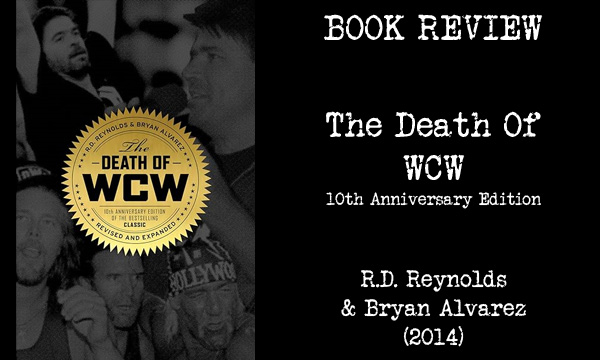
BOOK REVIEW – The Death Of WCW (10th Anniversary Edition) (2014)

So in 2004, The Death Of WCW was released. A tome written by Wrestlecrap connoisseur R.D. Reynolds and Figure Four Minus Five Stars guy Bryan Alvarez, it was a fascinating and insightful look at the history of World Championship Wrestling, from its early days to its most profitable period to eventually its downfall. Ten years later, they release an expanded edition of the book to commemorate the book’s tenth anniversary… because the thing still gets published and apparently still sells, which justifies said expanded edition.

For all intents and purposes, this is the same book you’ve read in 2004… at least, for the most part. A lot of the text included in the old book has been retained for the most part, but at the same time, the new Death Of WCW book almost feels like a completely different book. Surface-level, it uses different fonts and pictures as the previous book. Dig a bit deeper and a lot of the items that have been mentioned in the previous book has been expanded upon with actual quotes from those who were on the “front lines” as it were. There are also new items added in for good measure. In a sense, this book feels like a more refined product of what came out ten years prior; almost as though this was the book that was supposed to come out, but didn’t because of space constraints.

But what makes this book even more insightful is that not only does it expand upon the unfortunate tale of World Championship Wrestling, but it also points out some of the mistakes that are being repeated TODAY by the major promotions. Remember that mirror gimmick where Hogan (and the audience) could see Warrior in the mirror, but nobody else in the room could? Did you know WWE tried that stunt not just ONCE, but TWICE? Many of these lessons not learned are highlighted and pointed out… although there are a couple lessons that have been “learned.” Remember when WCW unmasked Rey Mysterio Jr? You don’t? Well, good. Nobody else does, either.

In the original book, the epilogue covered the mismanaged Invasion that dominated WWF television for the latter half of 2001. Sadly, that entire chapter has been excised from this new edition, but in its place is a laundry list of all the stupid things that TNA Impact Wrestling has done over the course of its dozen year existence… and it is just as lengthy as the original epilogue. It is, perhaps, the closest thing you’re going to get to a Death Of TNA book… assuming such an event happens sooner than later.

All in all, this expanded edition is worthy of being added to your library, even if you already have the original book. It’s the same book with some expanded bits, but feels different enough that it’s worth taking up another slot on the shelf. Those who didn’t care for the book the first time… well, I doubt anything here will change your mind, but this version feels more complete.

A hearty recommendation.

MOVIE REVIEW – Angry Video Game Nerd: The Movie (2014)

So I had originally intended this to be an extended vlog – about fifty minutes or so, but due to a variety of technical issues including Vegas crapping out on me multiple times during the rendering process, I ended up having to do a much shorter vlog, which in hindsight, may have been for the best. However, someone wanted the full version and while the chances of that happening now is slim, I did have the original text (or script, as the kids call it) for what the intended vlog was supposed to be… and so here it is, with some minor fixes and edits to make it readable at most.

Continue reading “MOVIE REVIEW – Angry Video Game Nerd: The Movie (2014)”

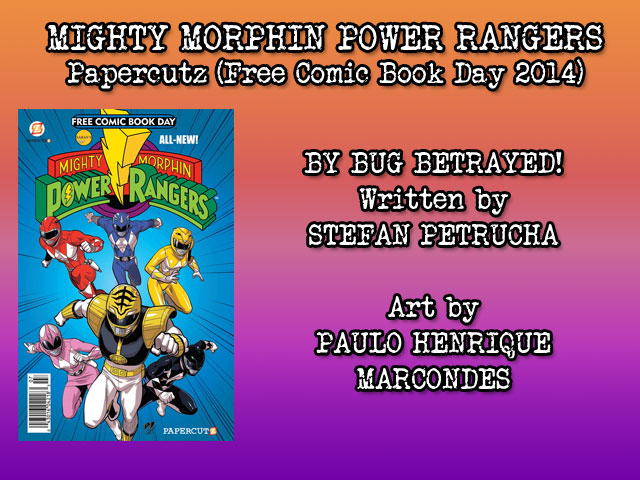
COMIC REVIEW – Mighty Morphin Power Rangers (PaperCutz) Free Comic Book Day 2014

For those who missed out, there was a line of Power Rangers comics put out for a couple years by a company called PaperCutz, who mostly specialize in family-friendly comics. Nothing too risqué, but at the same time, somewhat toned down from the usual comic fare. They mostly did a handful of comics based on the current run of series (Samurai, Megaforce), but eventually got around to doing a couple MMPR comics before the license expired earlier this year.

I found myself with a copy of the MMPR book that they put out earlier this month as part of the Free Comic Book Day event. It’s a story that takes place during the 2-part White Light episode, shortly after Tommy became the White Ranger. By Bug… Betrayed involves Lord Zedd turning Billy’s Rad Bug into a monster because… sure, why not? We also have a subplot of Zack explaining the joys of collectables to Kimberly (no doubt catering to the speculative market who collects these things, grades them, displays them, and does nothing of significance with them), and we also get a shot of Trini almost getting run over by a car… which garnered some negative reaction due to the scene being in poor taste.

For those who don’t recall, the actor who played Trini in MMPR – Thuy Trang – lost her life in a car accident… and pray that the people decrying this in bad taste did not write fanfics that parlayed that real life tragedy into a plot point of their unoriginal narrative… though, for what it’s worth, when I still wrote fanfics, Trini was still very much alive… but I digress.

(2026 Update: They eventually edited the panel so that Kimberly was the one who nearly got run over… in the digital releases, anyway. This one sequence is why Boom didn’t include the issue in their MMPR Archives collections.)

Anyway, it’s a book aimed for the little ones, so naturally the whole thing is dumbed down considerably. The story, while a bit silly, isn’t outside the norm of MMPR – see Season 3’s Follow That Cab, for example – but the dialogue is what gets me. A couple minor errors (Skull is called Spike, wrong Zord calls) and some rather cringe stock words that I can’t imagine any of the actors speaking. Even the artwork feels a bit lacking here. It’s clean looking, the costumes, monsters, and zords look fine… but the teens only bare passing resemblances to the actor who played them – you’ll recognize the hair, but not so much the faces.

Part of me wonders if this was originally intended to be either a Samurai or Megaforce book, but then someone decreed that we need MOAR MMPR and we got this. PaperCutz did put out a couple of MMPR comics, but if they’re anywhere close to the quality of this, I’m probably going to skip on those. Sorry.

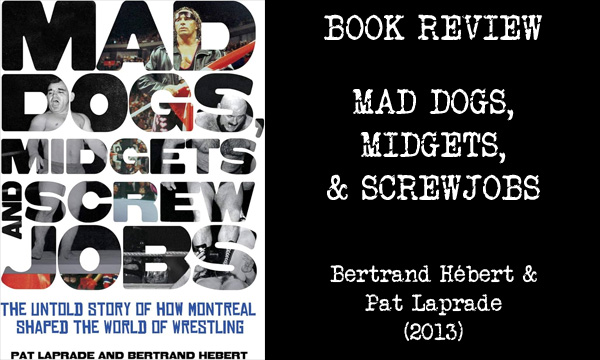
BOOK REVIEW – Mad Dogs, Midgets, And Screwjobs (2013)

Neglected to mention this, but a couple weeks ago, I picked up this book from the bookstore and it’s actually quite a bit of an interesting read. Yeah, it’s a wrestling related book about the history of wrestling in what they call the Montreal territory… and yes, they do cover the Montreal Screwjob that everyone and their pet pygmy marmosets have covered since forever, but then there’s a look back at all the various Quebec-born talent and a lot of memorable stuff tied to the territory, such as the 1997 match between Jacques Rougeau and Hollywood Hogan (that Hogan lost!) and the Pat Patterson brunch segments that aired in francophone markets (if you speak French, look them up on Youtube; they’re fucking hilarious). Of course, there’s a feature on the current scene as well (as current as the book allowed, at least.)

No doubt the authors of this book went to maticulous detail dwelling into the history of Montreal’s contributions to professional wrestling, but there were moments where I wished they dwelled into some topics a bit more in-depth. Sure, the thing with Bret, Shawn, and Vince have been covered to death, but I doubt plenty of people knew about the original Montreal Screwjob from 1931 between Ed Lewis and Henri Deglane. Would’ve been nice to know more.

As it is, though, this was actually a nice little read and an interesting look into Montreal wrestling.

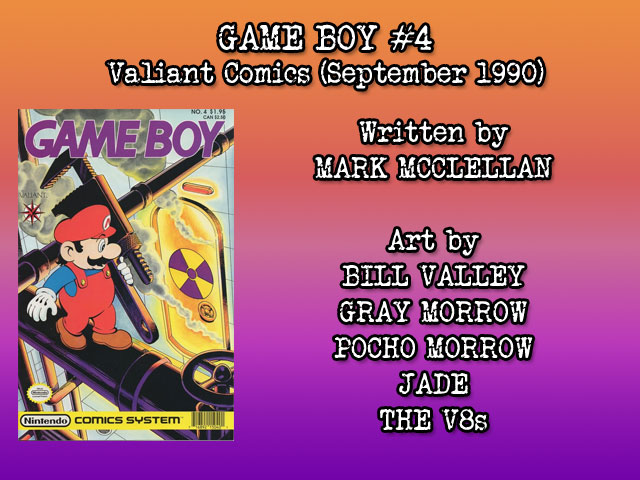
COMIC REVIEW – Game Boy #4 (1990)

The final issue of Game Boy is among us… and you wouldn’t know it by reading the issue because it reads just like every other story in this series. That asshole Herman shows up somewhere, lets Tatanga and his cronies loose some place, and they cause some havoc… although this time around, Tatanga is lenient enough to throw Princess Daisy a birthday party.

Oh yes, they included Princess Daisy in here… who, at this time, was just a mild palette swap of Princess Peach. (To be fair, Daisy showed up for one game and was completely forgotten about afterwards until, what, Mario Tennis on N64 or something like that?) She’s been a character in these things and she’s always in the clutches of that dastardly alien. Again, appreciate these moments of Tatanga being treated as a major threat before we forget about him in short order.

There is some high stakes here, because Mario has to do some plumbing in a nuclear power plant and that exposes him to radiation, which can kill him. And video game characters who die in the real world… die for real. Which means Nintendo will have to hedge their bets on Luigi going forward if the world’s most famous plumber doesn’t make it back to the world of Game Boy. And then someone stole this idea and turned it into Wreck-It-Ralph. Go figure.

The final issue of Game Boy ends with neither a bang nor a whimper. It just ends and whatever happens next is best left to the imagination. Honestly, it’s probably for the best. I will say one thing; the comics themselves might not have been great, but I’d be lying if I said that they were boring. I actually got a bit of a kick reading these thing and I maintain that of all the Nintendo Comics System series that Valiant put out, Game Boy was the most interesting in terms of concept. I only wish that they went a little further with the idea and expanded into other Game Boy titles being put into play here. Mario was in a bunch of them. Not so sure why you couldn’t pull this off.

Maybe someone can… perhaps they should. In fact, you know what, Nintendo? Do it. Get someone to revive the Game Boy comic and continue where this left off. It’ll be the best thing to happen since the Wii.

One thing’s for sure… Wii U is NEVER getting its own comic book.

Never gonna happen.

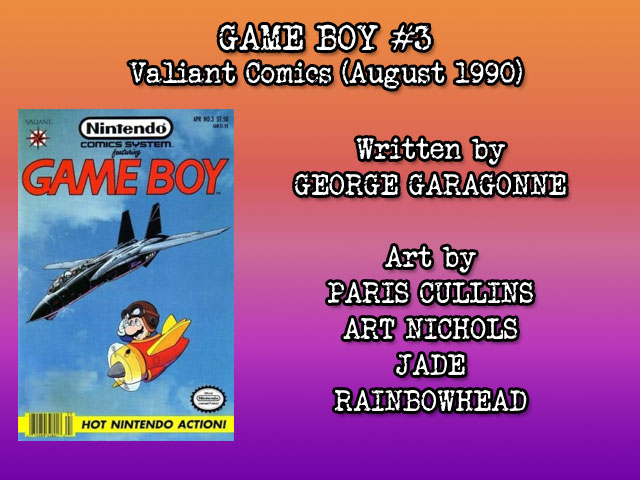
COMIC REVIEW – Game Boy #3 (1990)

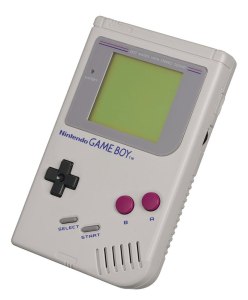
Happy 25th, Game Boy.

Last time, Mario was on a passenger jet. This time, Mario takes to the skies as that dastardly Tatanga attempts to take over an aircraft carrier… oh, and that Herman fellow is still around, now pursued by the FBI for his alleged hijacking of the airplane from last issue. Seems like he’s our main secondary character that we follow after Tatanga, Mario, and all the minions. Feel free to appreciate Tatanga’s only stretch as a major threat to Mario before he gets bumped down to Moon Zone boss a year or so down the line, but I digress.

I feel like I’m lost when it comes to these stories. I get that these were primarily aimed at children and thus is written as children’s fare, but even within that context, you would think that, at some point, we’d get some explanation as to how these intrusions keep happening and why no one figured the solution would be to take these cursed Game Boys and Mario Land cartridges and just destroy them. That way, no more Tatanga invading our world. Seems like a simple fix, but they never address it.

Then again, this is simple fare where the core audience this is written for only cares about Mario and his shenanigans… and hey, he brought SkyPop with him. I’m all for more SkyPop in Mario media, especially one part where SkyPop gets a considerable upgrade in firepower. It’s entertaining fluff, if nothing else.

Well… we’ve got one more issue to go, folks. Let’s see how this thing comes to an end.

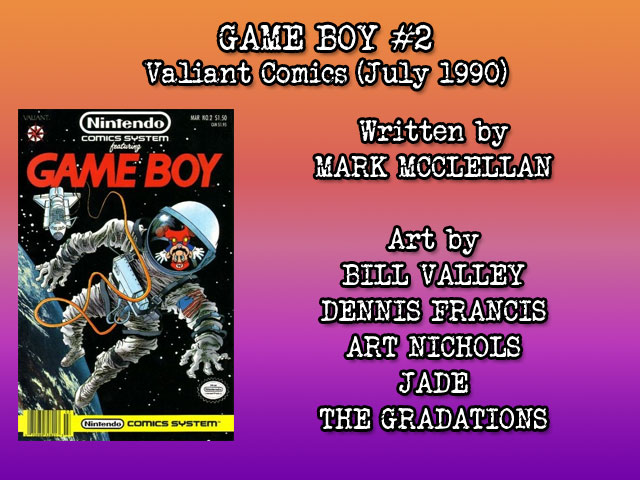
COMIC REVIEW – Game Boy #2 (1990)

So one of the main characters in this issue – a girl named Tannis – complains about not being rescued by something from Tetris, since she knows that game. Not so sure how that’d work out, but hey, at least we’re referencing different games.

So, the premise of Game Boy becomes readily apparent here; this Herman fellow frees up Tatanga and crew to wreck havoc in different locations and some other character releases Mario in another Game Boy so that he can save the day. We’re on a plane this time around. Our main protagonist is the aforementioned Tannis. And now we sort of see what we’re dealing with here; it’s mostly Super Mario Land elements and not much else, but invading real world settings and even trashing a Disney ride in the process. Again, there’s not much to the story. Humans and Mario help each other out, push Tatanga back into Videoland or whatever the case may be, and ol’ Herman scurries off to another gig of failure.

It’s lightweight storytelling, but to be fair and in a rare positive to the series in general, you’re getting a full issue worth of story divided into two chapters, as opposed to the other books where they gave you two short stories and a couple extras. It’s worth noting that one of the many artists to contribute to Game Boy’s artistic efforts (not featured here, though) is one Gray Morrow, the one name I recognize from the menagerie of artists working on this thing because he would do some of the MMPR comics from Hamilton Comics. In fairness, the way that the humans are depicted in these books don’t vary too much and there are so many people on art duties that him skipping out on this issue is not even a factor.

Game Boy #2 feels like a rehash of what came before and pretty much cements the gimmick of this series.

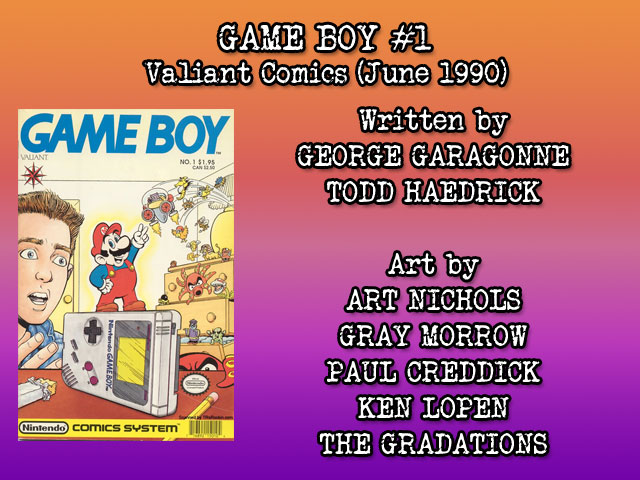
COMIC REVIEW – Game Boy #1 (1990)

Valiant Comics – a name you probably haven’t heard much of these days because they’re no longer around – published a number of comics . … Somewhere along the way, they got the rights to produce some Nintendo comics. Mostly Super Mario Bros, but there was also a Captain N comic, a Legend Of Zelda comic, and a Game Boy comic.

You hear me. Game Boy.

Yes, the Game Boy got its own comic in 1990. That’s how hot that thing was.

I don’t recall Atari Lynx getting a comic book.

Or Sega Game Gear.

Running for four issues, Game Boy presents an interesting inverse of the Captain N concept. In Captain N, real life high schooler Kevin Keene is sucked into the world of video games as the chosen savior. In Game Boy, the video game critters pop out of a Game Boy to invade the real world and the only one who can save them all is Super Mario… who is also popping out of a Game Boy. Coincidentally, all the critters seem to come from Super Mario Land, the sole portable Mario platformer at the time.

It’s an interesting yet silly little premise for a book. Certainly something unique for what is essentially another Mario comic, as instead of doing more of what they did in the other two SMB comics, they’re bringing Mario and his menagerie into the real world – which feature fairly realistic looking humans and real world settings to contrast with these incredibly cartoonish looking caricatures, whom look the parts if nothing else. You only get a tease of that in the last few pages of the book and I’m wondering if the series eventually adopts other Game Boy titles into the mix. (Yes, they mostly used first-party Nintendo games… so what? Alleyway is still something they can use.)

Let’s be fair here; this isn’t a particularly good comic. The first bit of it is dedicated to unlikeable store clerk Herman and our main protagonists, Rick and Josh – one cool kid and the other not so cool kid. I’ll let you decide which is which. And then we have Mario Land final boss Tatanga taking over a shopping mall and then Mario shows up from another Game Boy via a third door at the end of a typical Mario Land level (usually, there’s two, so we have some semblance of an out here?) And from there, stuff happens fairly quickly, everyone is repelled back to Game Boy Land, and you’re left wondering how and why… and I’m not so sure that we ever got those answers. And given that this only ran for three more issues before the license expired, I can only imagine how things work out from here.

But you know what? Now I’m intrigued by where this go. Can’t think of a better thing to cover for Game Boy’s 25th anniversary than a comic about Game Boy.

PSP ain’t getting no comic book any time soon.

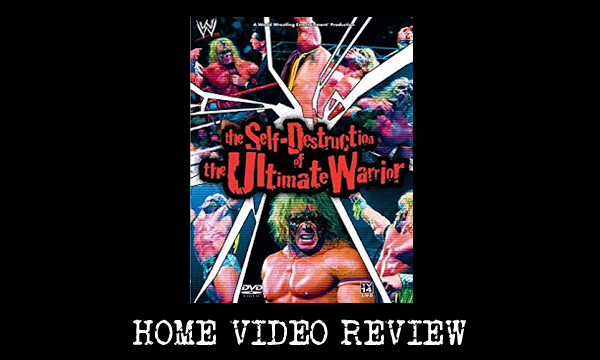
DVD Review – The Self-Destruction Of The Ultimate Warrior (2005 DVD Review)

The Ultimate Warrior is a bit of an interesting character. Inside the squared circle, he was one of the most colorful and dynamic wrestlers you’d find in the WWF atmosphere. Regardless of what you thought of him as a wrestler, a promo guy, or character, you can’t deny.

However, outside the squared circle, Warrior was a bit of an asshole who seemed to have a hatred for anything or anyone who didn’t worship the ground he walked on. He had controversial opinions that drew the ire of colleges and colleagues, burn bridges on a whim, and had an absolute disdain for Vince McMahon and his circle of stooges to the point where both were involved in lawsuits up the wazoo.

So for WWE to induct the Ultimate Warrior into the Hall of Fame is as much of a surprise to me as anyone, especially to those who knew of the rather turbulent relationship between the two sides over the years. All of a sudden, both sides are happily

Therefore, to celebrate the occasion, we’ll be taking a look at The Self-Destruction Of The Ultimate Warrior, a DVD release from 2005-ish where everyone shits on Warrior, back when it was cool to shit on Warrior because he was such a cunt.

Continue reading “DVD Review – The Self-Destruction Of The Ultimate Warrior (2005 DVD Review)”